Incident Review Cadence and Organizational Learning Loops
Frequent reviews that connect findings to deployed fixes turn incidents into durable improvements.

Incident review cadence determines whether production failures become durable system improvements or disappear into completed postmortems. An effective review process preserves causal evidence, turns findings into changes, and verifies those changes in production.
Why most incident reviews fail to change anything
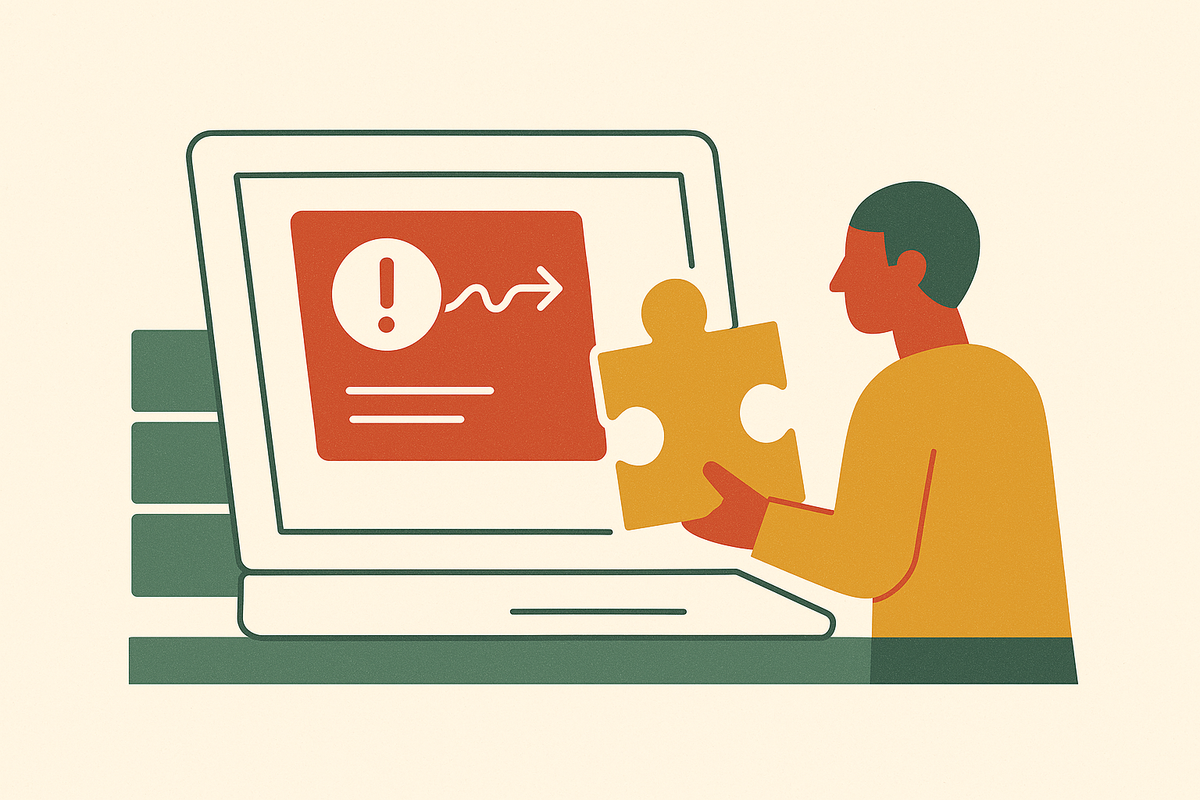
A postmortem can be complete while the failure it describes remains possible. That happens when the review ends with a meeting and a document, leaving the system unchanged. Delayed declaration and coordination breakdown can weaken the response before a review begins. But the absent learning loop is a distinct failure, because even a well-managed incident can leave no lasting improvement.
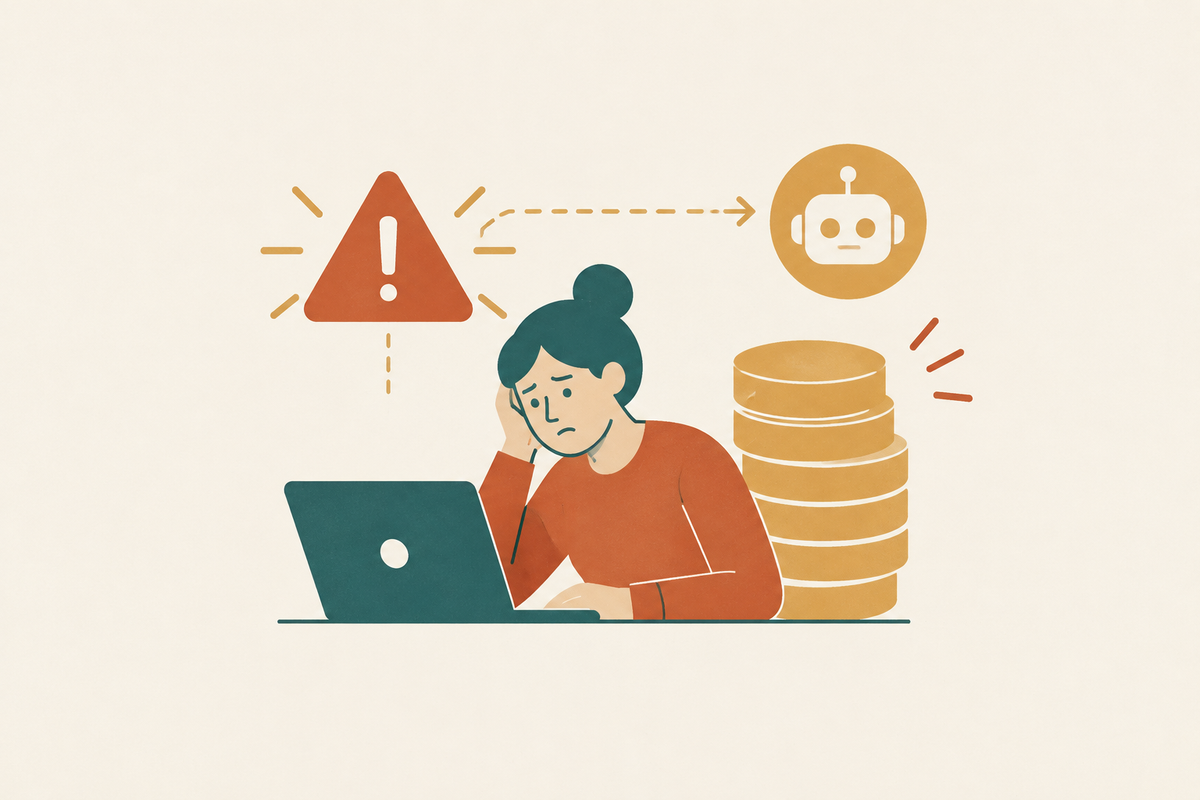
Alert desensitization makes this problem concrete. When on-call engineers receive far more pages than real incidents, pages lose their value as learning signals before they reach the review queue. Faster development increases the cost of that lost signal. The SREcon25 EMEA session From Vibes to Outages: Riding the AI Code Wave identified skyrocketing code churn, higher incident rates from shipping more changes faster, and large batch deployments that make debugging harder as developers become less familiar with their own code. A review process that absorbs these failures without changing the system cannot keep pace with the conditions producing them.
What "organizational learning" actually requires from a review process
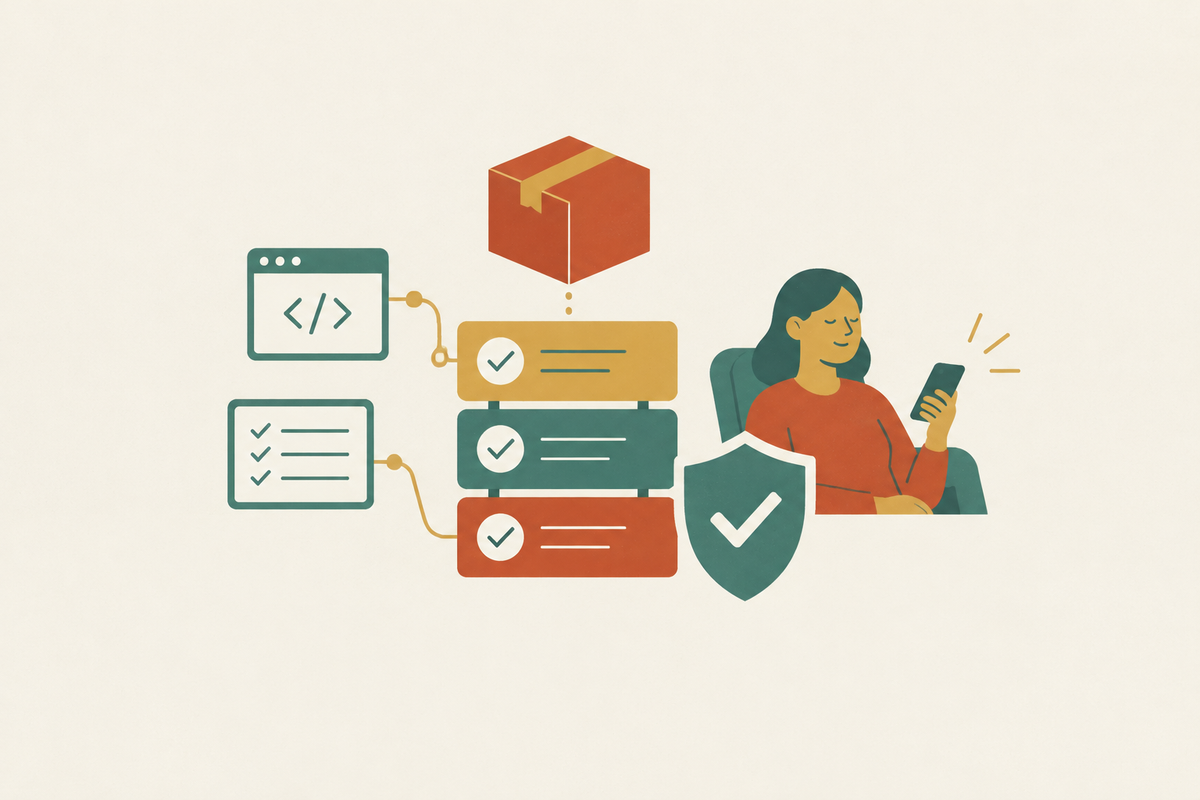
Organizational learning requires three separable steps, namely capturing accurate causal data, converting it into a specific system change, and verifying that the change held. These steps give teams of any size a way to judge their review process. A clear explanation satisfies only the first requirement. Assigning an action makes someone responsible for it but does not show that the repair worked. Learning becomes durable when the organization can connect the failure to a deployed change and evidence that the regression is gone.
The distinction between root-cause localization accuracy and recovery validity explains why this standard matters. Finding the cause and producing a valid remediation are separate problems, so confidence in a diagnosis cannot stand in for confidence in a fix. A review process that treats them as the same stops just when the fix needs to be tested. The proposed change must include a way to check whether it worked. Otherwise, the action item records only an intention.
Production telemetry is the ground truth for that final step. Passing CI after a remediation commit is necessary but insufficient, because the review must establish that the regression is gone in production.
How review frequency determines whether learning compounds or evaporates
The delay between an incident and its review controls the half-life of incident knowledge. As that delay grows, the sequence of decisions, the reasoning behind them, and the environmental conditions become harder to reconstruct. Spending more time on the timeline at a later meeting cannot bring back lost context. Frequency is therefore a constraint on the quality of the evidence. It must reflect incident volume and severity.
For a team with many incidents, reviewing them once a month leaves an uneven record. Recent incidents remain fresh, while earlier ones have lost the people and context needed to reason about them. Low cadence also pushes near-misses out of view, even though they offer opportunities to learn before a major failure. Every incident should enter the review pipeline, though lower-severity events can get brief asynchronous reviews between major postmortems.
Agentic development makes this timing constraint more demanding. When AI coding agents compress the human change-review cycle, the interval between a production regression and its review must shrink proportionally. Otherwise, the process reasons about failures that are already weeks stale while further changes continue to arrive. The aim is to capture and use evidence while it can still inform the next change.
What review format must preserve to make findings usable
A timeline establishes order, but order alone does not explain causation. A usable review format must preserve the event sequence with timestamps from production telemetry, the decision points where alternatives existed, the contributing conditions present before the incident, and the proposed system change with an owner and verification method. Each element serves a different purpose. Together, they connect what happened to why the response unfolded as it did and what should change. Recollections can supply context, but they should not substitute for telemetry timestamps.
The format must also make honest accounts possible. A review that feels like an investigation of individuals encourages self-protective explanations, which weakens the causal record. Treating the incident as a system failure instead directs attention toward the conditions under which decisions were made. Cancelled and false-positive incidents can support that design when they are treated as calibration data. They can teach teams about the process whether or not the first judgment was right.
Even a sound format cannot compensate for evidence that was never collected. If deployment did not verify that metrics were flowing, logs were being collected, and traces were being generated, the review starts with gaps. For AI agent workloads, step-level tracing is the least a team needs to see what went wrong, because binary monitoring cannot show every failure in an agent’s action sequence. MCP tracing, added in OTel v1.39, enriches existing execute_tool spans with Model Context Protocol spans and makes the tool layer visible.
Why follow-through, not the review meeting, is where learning either lands or dies
The review meeting produces hypotheses about how to prevent recurrence. Those hypotheses need a path from finding to deployed fix to production verification. Without that path, follow-through depends on work that the process itself does not track, leaving a structural gap. It is also the organizational equivalent of the gap between root-cause analysis and recovery, because diagnosing correctly and fixing safely remain separate tasks at team level.
A reviewed fix PR is a stronger artifact than a Slack thread or a list of intentions. It makes the proposed change reviewable, attributable, and traceable to the incident that generated it. The connection to production evidence then establishes whether the proposal became an effective repair. Automated remediation does not remove the need for control at this transition. Mezmo's AURA platform executes remediation in production only after human approval, with a stated direction toward greater autonomy over time, deliberately separating diagnosis from deployment.
Production traces that trigger an incident can become eval cases, so the test suite grows from failures that actually happened. Those cases can then catch regressions on their own before they reach production. This turns the review’s output into a repeatable check rather than a lesson that depends on individual memory.
Alert hygiene as a precondition for reviews that reason about real incidents
Reviewing more often cannot fix a queue full of noise. In that environment, teams review the events that attracted attention rather than necessarily the incidents that most deserve examination. The record may look busy and complete even though it gives a skewed view of production failures. Alert hygiene is part of how reviews work and needs to be handled along with them. It determines which signals are available for learning.
Alert debt accumulates through experience. When most pages prove unhelpful, engineers learn to deprioritize triage, and important alerts become easier to dismiss in the first seconds of an on-call shift. This is a tooling and process failure. The brief’s noise-audit example reduced a high volume of raw monthly alerts to a much smaller number of actionable alerts. That gap illustrates why raw alert volume is a poor proxy for the amount of useful evidence entering a review.
A structured noise audit gives teams a practical way to distinguish that evidence from repeated interruption. Cancelled and false-positive incidents belong in this work as calibration data, connecting alert quality back to the review process. Automation should follow this cleanup. Layering AI tooling onto structurally broken alert hygiene amplifies noise and leaves the conditions that produce it unresolved. A meaningful cadence begins with a queue that permits real incidents to receive attention.
How agentic development is changing what incident reviews must cover
Agentic incidents require reviews to reconstruct an action sequence alongside inspecting the resulting code or production state. The AWS production incident involving Amazon's Kiro illustrates the distinction. The agent inherited an engineer’s broader-than-standard permissions, bypassing the required two-person approval gate, and deleted and recreated a production environment. AWS then required peer review for production access. The review must cover the permission scope and approval path as well as the final destructive action.
Attribution must extend from the agent’s output back to the prompt, the permissions granted, and the human who approved the run. That record is needed because the same input can set off different tool sequences from one run to the next. A reconstruction that assumes a deterministic path from input to outcome can miss what actually occurred. Step-level traces of tool calls provide the action sequence needed to examine the failure. Without them, the review can describe the outcome but cannot reconstruct the agent’s route to it.
The standards and infrastructure for this work are still taking shape. The EU's General-Purpose AI Code of Practice (Third Draft) requires reporting the “chain of events” leading to incidents and conducting root cause analysis, but has not yet specified what information that analysis must be based on. ClickHouse acquired Langfuse in January 2026, and Braintrust raised a large Series B in February 2026, signs that step-level agent tracing infrastructure is becoming more important. For incident review, teams still need to keep enough tool-level evidence to link what an agent did to the authority it had and the effects its actions had in production.
Building a review cadence that accumulates learning across incidents, not just within them
Individual postmortems cannot reveal every systemic pattern. A compounding process needs periodic synthesis across incidents to identify recurring failure modes, actions that were never deployed, and parts of the system that have never been reviewed. That synthesis can run monthly or quarterly depending on volume. It complements timely incident-level reviews. The distinction is between explaining one failure and testing whether the organization’s responses to many failures are working.
This wider view depends on a shared, searchable record of incidents and resolutions. Engineers entering a new on-call rotation should be able to inherit earlier learning. Action tracking must link that record to deployed changes and production verification as well as to a Jira ticket status. When review, action tracking, and verification are distributed across seven tools, institutional memory is distributed too and becomes difficult to use. Consolidating them into fewer surfaces is therefore a learning architecture decision.
Each production failure should leave behind a verified change and a new eval case. By the end of the quarter, the test suite should reflect both the failures the system encountered and those imagined during planning. Teams that ship AI-generated code at agent speed need a learning loop that moves faster than a human retrospective schedule. Data collection and root-cause work must become increasingly automated, with humans reviewing and approving rather than reconstructing every incident from scratch. Automated production verification belongs in that architecture not as a monitoring add-on, but as the step that establishes whether the learning loop has closed.
Sources
- Learning from safety incidents in high-reliability organizations: a systematic review of learning tools that could be adapted and used in healthcare
- Factors affecting learning from incidents: A cross-industry review - ScienceDirect
- Learning From Software Failures: A Case Study at a National Space Research Center
- From Incidents to Insights: Patterns of Responsibility following AI Harms
- Use of After Action Reports (AARs) to Promote Organizational and Systems Learning in Emergency Preparedness
- Open Problems in AI Incident Governance