Alert Fatigue Reduction Through Automated Triage
Automated triage systems reduce alert overload by filtering noise before analysts see it, not after.
The best way to reduce noisy pages after every release is to stop treating alert fatigue as a willpower problem and start treating it as what it is: a defect in how detection systems are built and how their output reaches engineers. Healthcare ran this experiment decades before software did. When alarms go off constantly, clinical staff stop responding to any of them, even the ones that signal a real emergency, and doctors call this alarm fatigue. Security and engineering teams are living through the same mechanism now, just with a different alarm. Static, rule-based detection tools fire on every anomaly without context, and the resulting volume outpaces what any human queue can absorb. It is a structural mismatch between how much a detection system produces and how much a person can review, and no amount of asking engineers to "pay closer attention" changes the math on that mismatch.
Alert fatigue at the team level
At the team level, the failure appears as a backlog that never shrinks, a mean time to triage that keeps climbing, and analysts who wave off low- and medium-severity alerts on reflex because the overwhelming majority turn out to be nothing. Vectra AI's research found that organizations get an average of 2,992 security alerts a day, and 63% of them go unaddressed. That means most of the daily workload a team generates for itself produces no security or operational value at all, and the people responsible for reviewing it know this, and that is why they stop reviewing it carefully. The overnight shift takes the worst of it. Circadian dip, the natural drop in alertness between roughly 2 and 6 a.m., stacks directly on top of whatever volume fatigue is already present, so the hours with the thinnest staffing are also the hours the queue demands the most from the fewest people. Incidents that start late and don't resolve by shift change add a second failure mode on top of that: context has to transfer between an outgoing analyst and an incoming one at the exact moment both are least sharp, and a dropped detail in that handoff is how a manageable alert turns into a Monday-morning incident. None of this is careless behavior. It is a team that has been rationally trained by its own tooling to ignore alerts, because acting on every one would mean acting on noise most of the time. Hiring more analysts doesn't fix a signal-quality problem; it just puts more people in front of the same noise, and the global shortage of qualified analysts makes headcount an unreliable lever regardless. The fix has to happen before the alert reaches a person, not after.
Traditional detection and prioritization tools cannot fix what they caused
The instinct to write more rules, tighten thresholds, or consolidate dashboards into a single console treats the symptom at the same layer that produced it, and that's why none of it holds up over time. Rules can't adapt to new attack techniques or changing infrastructure on their own; they decay as the environment shifts, so you end up tuning them by hand on a maintenance treadmill that never ends. An analyst still has to work out which incident deserves attention first, and fewer consoles doesn't answer that. The Microsoft Security Research team behind Adaptive Incident Prioritization found exactly this: pulling alerts into one screen without intelligent ranking still leaves an analyst staring at an undifferentiated queue, just a tidier-looking one. Fragmentation compounds the problem before consolidation even enters the picture. Organizations run an average of 10.9 separate security consoles, each with its own severity scale and its own alert stream, and the connections between alerts that belong to the same incident routinely get missed because no one tool sees the whole picture. Even classical anomaly-clustering approaches can group related signals together, but they don't go on to investigate them. What they produce is a heuristic ranking, not a causal explanation, so the interpretive work that burns out analysts in the first place still lands on a human. You have to fix this at a different layer entirely, upstream of where a person ever sees the queue.
Automated triage before human review
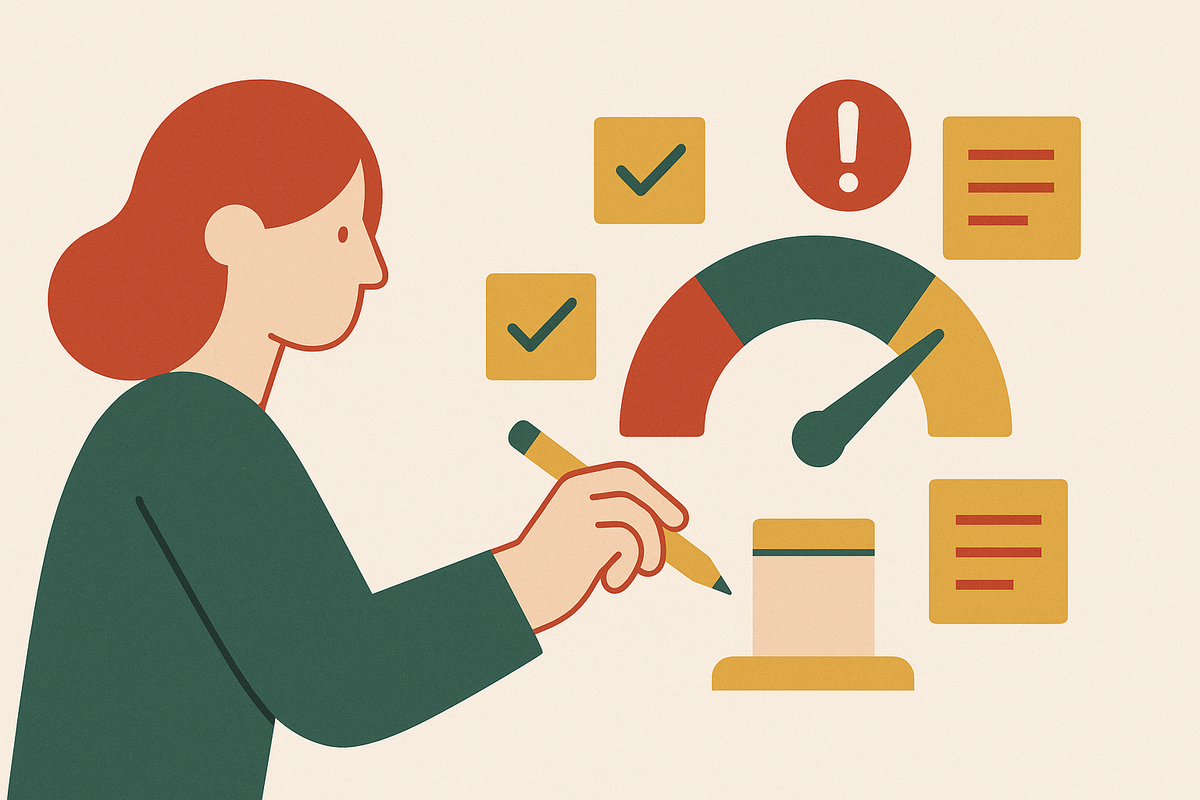
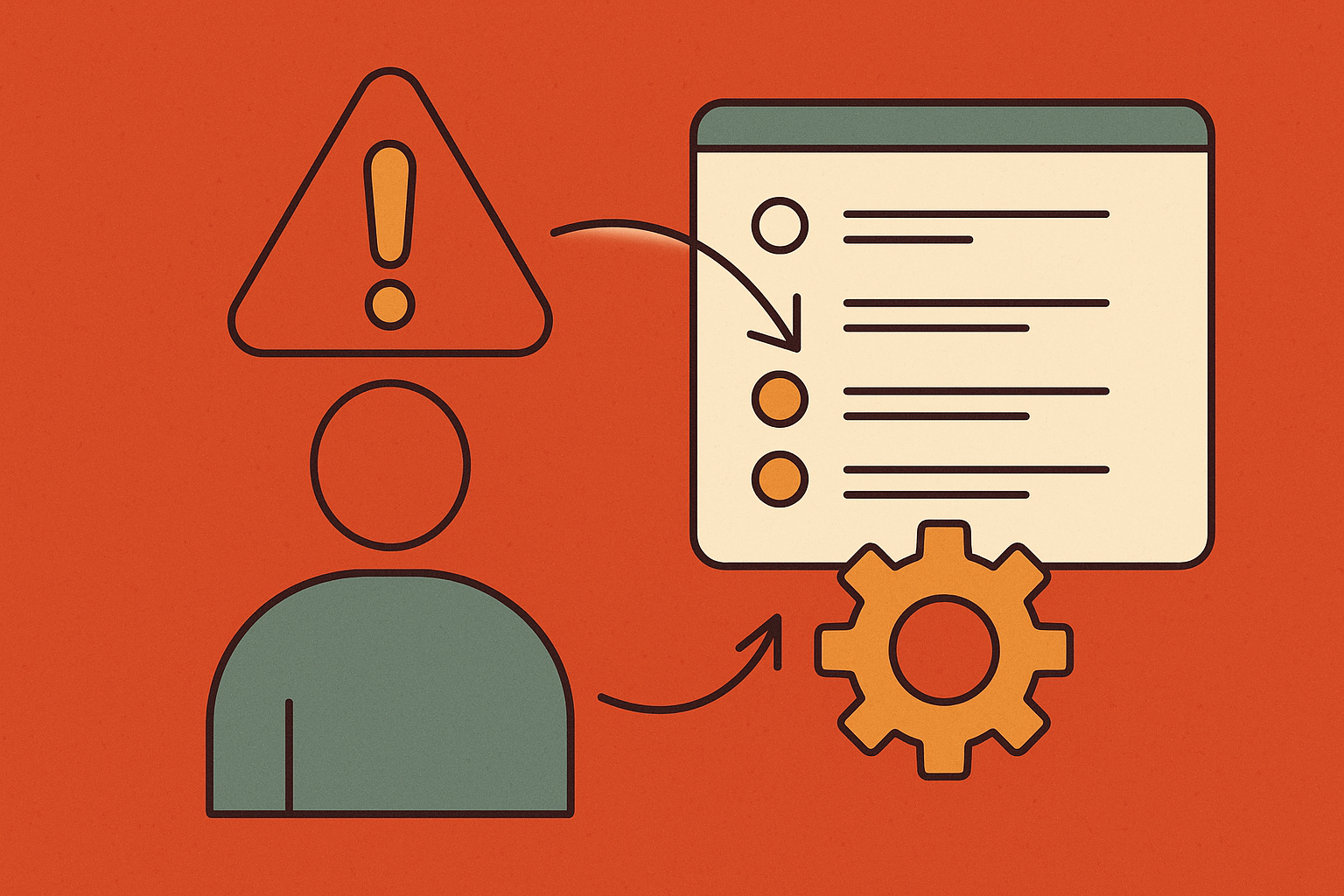
Automated triage works by doing the deduplication, enrichment, correlation, and scoring before an alert ever reaches a human, so the queue a person actually sees contains only the signals worth their judgment. Duplicate alerts generated by the same underlying event get collapsed into one, and related alerts get grouped into a single incident, so an analyst reviews one coherent case instead of reassembling a dozen fragments by hand. Machine learning models score severity and likely impact using historical data, behavioral baselines, and environmental context, and those scores adapt as the model learns from how analysts actually respond, which is a fundamentally different approach than a static threshold someone set once and forgot. Routine Tier 1 work, gathering context, pulling in additional telemetry, running an initial pass of investigation, happens automatically, so what reaches a person is a decision-ready summary instead of a raw alert they have to piece together themselves.
Microsoft's Adaptive Incident Prioritization, the ranking algorithm behind Defender Queue Assistant, shows what this looks like at real scale. AIP is deployed across tens of thousands of customers: it represents each incident as a set of normalized security components, weighs how often a component shows up locally against how rare it is across a much larger cross-tenant corpus, and refreshes its scores with a median latency of five seconds. Measured against plain severity ordering, it produced a 17.5% increase in alert-detail view events, so analysts spent more of their attention on incidents that were actually worth opening. None of that works without explainability built in from the start: AIP's design keeps the reasoning behind a ranking visible by construction, because an analyst who can't see why an incident moved up or down in the queue has no basis to trust the system's output, and a triage system nobody trusts gets overridden or ignored. Feedback closes the loop. When analysts investigate and resolve incidents, those decisions feed back into the model and improve its accuracy over time, without someone manually rewriting rules. One Patch applies the same logic downstream of deployment rather than inside a security console: it watches live production telemetry after a PR merges, correlates what it sees with the actual deployment that caused it, and filters out the noise before it ever becomes an alert an engineer has to look at. None of this works as a blanket guarantee. It works when the detection feeding it is sound and the rollout respects how much trust a team has actually built in the system, which is a constraint the next section takes seriously rather than glossing over.
Why instrumentation coverage is the prerequisite for automated triage
A triage system can only rank what it can see, and gaps in instrumentation produce blind spots that no amount of ranking intelligence can work around. Most root-cause analysis methods built on distributed tracing assume every service in the path is instrumented, but in real production environments that assumption rarely holds. Uninstrumented services are common, and they create blind spots that are invisible to a human reviewer and an automated triage model alike. Automated triage can suppress noise from the signals it receives, but it cannot act on a signal that was never generated. A regression in a service nobody instrumented will never enter any queue, ranked by a model or sorted by a person, because there was never an alert to rank. The real unit of improvement is triage paired with instrumentation coverage broad enough that a "low priority" ranking means something, rather than meaning the system simply never saw the problem. That same risk applies directly to AI-generated and agentic code that ships into production today. Agents are non-deterministic: their behavior shifts as the underlying models update, as tools change, and as traffic patterns evolve, and most of that drift happens quietly after deployment rather than announcing itself. A reliability stack built only around alerting on known failure modes won't catch drift it was never told to look for. Treating instrumentation as something bolted on after launch tends to produce the same outcome every time: an incident nobody can fully explain, a debugging session that stretches over days, and a retrospective where the conclusion is always that better instrumentation should have been there from the start.
The strongest objection: automated triage displaces noise rather than eliminating it
The most serious challenge to automated triage is that it makes a team faster at processing alerts without making it any better at finding the incidents that actually matter. If the signal coming out of detection is poor, ranking that signal more intelligently just changes the order the noise arrives in. There's real evidence behind this concern: in the SRE Report 2026, only roughly half of respondents said AI had reduced their toil, and the teams reporting no benefit tended to be the ones that bought triage tooling without first fixing detection hygiene. That's a sequencing failure, not evidence that automated triage doesn't work. Detection rule quality and instrumentation coverage have to reach a baseline where the input to a triage layer is worth ranking at all; triage has no way to fix a signal that was broken before it arrived. The practical path is a phased rollout: start with low-risk, well-understood workflows where outcomes are predictable, let the team build trust in what the system suppresses and why, and only then extend automation into the ambiguous, high-stakes incidents where a wrong call costs more. Even when you deploy it imperfectly, automated triage pays off most clearly overnight, because it pulls volume out of the queue during the exact hours human vigilance is already at its lowest. If confirmed or genuinely ambiguous incidents still reach a person, you get real value before the rest of the detection stack even catches up.
Catching regressions before they generate alert noise
Automated triage lowers the cost of responding to noise that has already reached the queue. Production verification checks the deployment itself against real telemetry, so it stops that noise from being generated in the first place, before a regression ever has the chance to page anyone. Triage operates after a signal has already been detected and queued, so it has nothing to work with if the detection layer missed the problem entirely or no alert was ever written to catch it. Production verification runs against live telemetry right after a deployment goes out, so it can catch a regression before a triage system would even have to rank the alert volume it generates. A CI pipeline passing is necessary, but it isn't the same thing as a change behaving correctly once real traffic hits it, and most teams stop at the first of those two checks. The gap between a green CI run and what actually happens in production is where most regressions live undetected until an alert finally catches them downstream.
Tool sprawl makes the cost of that gap worse during an actual incident. Every extra dashboard an engineer has to open while an SLO is burning takes time away from fixing the problem, so if you fold triage and post-deploy verification into one workflow, you don't force an engineer to context-switch across seven separate tools, and you gain reliability independent of anything else it catches. As AI agents ship code faster than any human reviewer can realistically keep pace with, automated verification after deployment becomes a structural safeguard against regressions that would otherwise only surface later as alert noise. Tools built to automatically investigate and triage signals after deployment cut both the raw volume and the false-positive share of it, because they correlate production telemetry directly with the PR that caused a change, so only real regressions surface, and that's exactly where the overnight-shift workload gets lightest. The right response to a confirmed incident is a reviewed fix PR assembled calmly, not a war-room thread at 3 a.m. Intelligent incident response platforms close that loop automatically: they propose a reviewed fix rather than simply routing another alert to a human, so the burden shifts up into the tooling layer itself and manual triage on that incident is no longer needed. One Patch is one platform built around that loop: it verifies each deployment against real production telemetry, catches regressions before they page anyone, and opens fix PRs on its own when something breaks. None of this replaces triage. It sits above it: fewer regressions reaching production means less raw material enters the alert queue, so whatever triage layer a team already runs is working on a cleaner signal than before. The two layers don't compete for the same job. They compound: a team running both is reducing noise at two different points in the same pipeline instead of just one.