Tooling Consolidation Impact on On-Call Cognitive Load
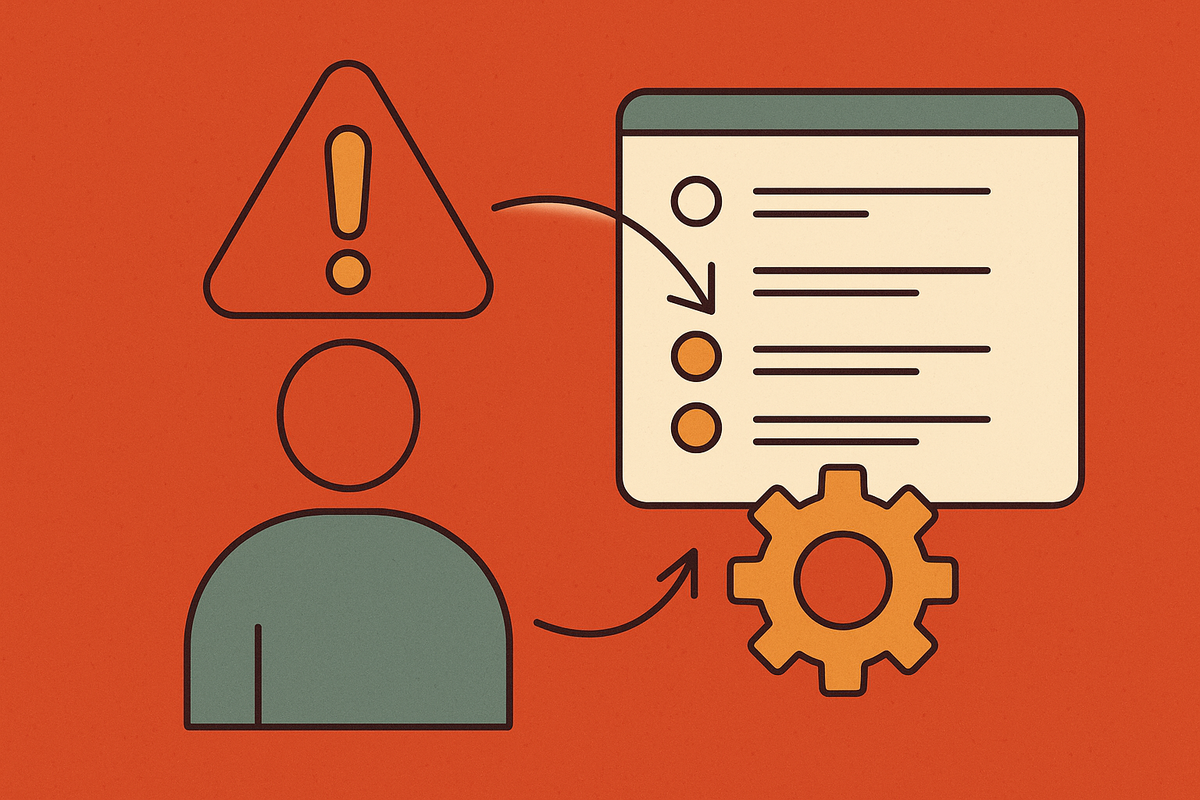
Fragmented tools force engineers to rebuild context during incidents when speed matters most.
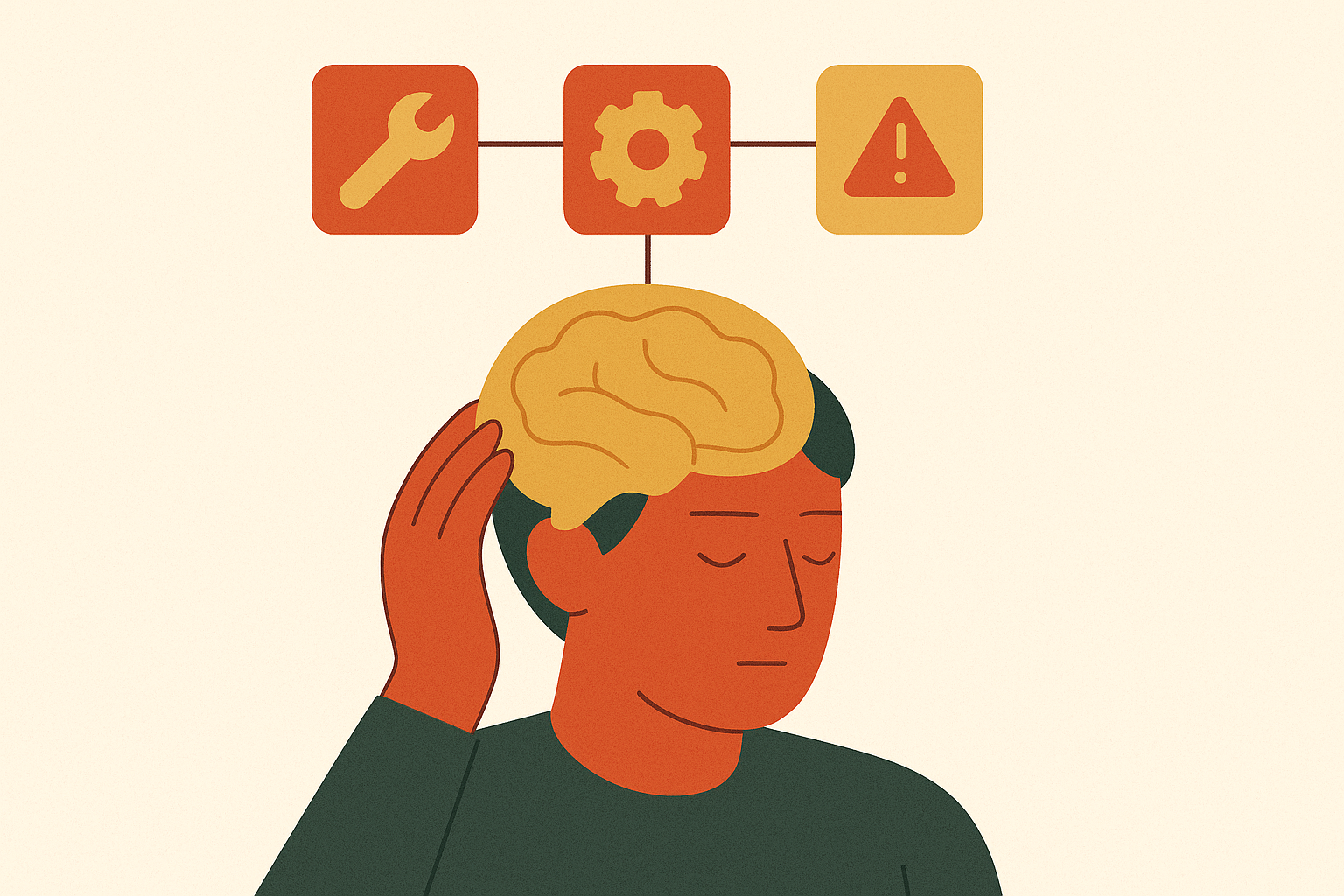
A fragmented on-call toolchain does not just slow engineers down during an incident. It degrades the quality of their reasoning at the exact moment reasoning matters most, because every switch between a logging tool, a tracing tool, and an alerting dashboard forces the brain to rebuild context it had already built once. The fix that reduces pages after a bad release is automated verification that checks what shipped against what production is actually doing, before an alert ever fires, so the regression gets caught and routed to a fix instead of a page.
On-call engineers' exposure to the cognitive cost of tool sprawl
Picture the engineer who gets paged at 2 a.m. for a P1. The service is degraded, the SLO clock is running, and the first ten minutes are not spent fixing anything: they are spent figuring out which of six or seven open tools holds the piece of the story that explains what changed. That is a different kind of pressure than the ordinary daytime friction of switching between apps to get a task done. For most roles, that fatigue costs a few minutes of friction spread across a day. For on-call work, it costs minutes that are actively burning against a service-level objective while the engineer holds incomplete information under time pressure, which makes the same fragmentation into something qualitatively worse.
The deeper cost is what a tab switch does to working memory, not the time lost switching tabs. Research on fragmented information presentation has found that when the details someone needs are scattered across multiple locations, that person has to mentally rebuild the workflow, guess at dependencies, and stitch the scattered pieces into something coherent before they can act on it. That is close to a precise description of incident response when logs, traces, alerts, and runbooks live in separate tools: the engineer is not just gathering data, they are reconstructing a mental model from pieces that were never designed to fit together. Each reconstruction is a cost paid in full, every time, no matter how many times the same engineer has debugged a similar failure before.
Alert fragmentation turns signal into noise and noise into missed incidents
Fragmented alerting does not just waste attention. It teaches engineers to withhold attention from the exact signals meant to earn it. Cloud-native systems emit a constant stream of metrics, logs, and traces from dozens or hundreds of services, and when each of those streams feeds its own separate tool, the engineer ends up looking at noise from every direction and a clear signal from none of them. Ignoring them becomes the rational choice given how the tooling behaves.
That adaptation is precisely what makes real incidents dangerous. The fix for this kind of fatigue is rarely a better alerting tool bolted onto the same fragmented sources. It is a reduction in how much of that fragmented surface the engineer has to look at directly, which raises the ratio of real signal to noise high enough that a page can be trusted again. Consolidation here is a reliability intervention: it works by shrinking the information surface until what gets through is worth responding to.
Distributed tracing gaps make tab-switching inevitable during root-cause analysis
Even a well-staffed team with good intentions runs into a structural obstacle that fragmentation alone doesn't explain: trace coverage is rarely complete. Most root-cause analysis depends on a distributed trace to build a service call graph, which becomes the map engineers use to localize a failure. But that approach assumes full trace coverage across the request path, and that assumption breaks constantly in real deployments. Services without tracing instrumentation create blind spots, and when a request crosses dozens of services, even one missing trace forces the engineer to abandon the trace view and go dig through logs, metrics, or manual investigation somewhere else.
The failure that teams run into most often involves async boundaries. Message queues and event buses don't carry trace context forward the way an HTTP request does, so every handoff through a queue or event bus is a point where the trace can simply stop. Each of these produces the same outcome: another tool opened, another context rebuilt from scratch.
Two efforts are closing this gap at the structural level rather than patching around it. eBPF-based observability, through projects like Cilium, Tetragon, and Pixie, captures network traffic and system calls at the kernel level regardless of whether the application was instrumented at all, which removes a large share of blind spots without requiring a single line of application code to change, and replaces a pile of separate agents with one shared substrate. Benchmarking presented at ICPE found that OpenTelemetry agents still carry measurable overhead from heavy metadata handling and inefficient implementations, though that overhead can be reduced by rewriting those implementations. Both point at the same goal: cut down the number of moments where an engineer has no choice but to leave the primary tool and go hunting.
AI adoption and the fragmentation problem
The obvious response to fragmentation, adding an AI layer on top of the existing tools, has mostly made the problem worse so far. First-wave AI in observability made correlation faster without making resolution faster, and in a lot of cases it added a new source of cognitive load rather than removing an old one. DORA's data linking higher AI adoption to lower delivery stability captures the shape of this paradox precisely: shipping got faster, but the changes shipped were more fragile, so more incidents arrived at the same time as more AI, not fewer.
Correlation is not the same job as root-cause isolation, and most of the first wave of AI tools only solved the first one. Some teams have gone as far as turning off AI runbook assistants after the assistant confidently issued the wrong command mid-incident. A wrong suggestion delivered with confidence during a P1 costs more than no suggestion at all, because the engineer has to notice it's wrong, recover their attention, and get back on track, and all of that happens on the clock. Heavy investment in AI has, in some documented cases, increased engineer toil rather than reduced it, and the reason is straightforward: automation layered on top of a fragmented toolchain inherits that fragmentation instead of fixing it.
The corrective is not to abandon AI in observability, but to point it at the right layer. When production telemetry is built directly into the incident investigation workflow, the signal-to-noise ratio improves because the tool has already checked the alert against what production is actually doing before the page reaches a human. One Patch takes this approach by automatically investigating what broke and proposing a fix, which removes the step where an engineer has to cross-reference several separate alert sources just to decide whether a page is worth acting on. That is a narrower, more specific use of AI than first-wave correlation tools attempted, and it's the direction that seems to actually reduce load rather than just redistribute it.
Agentic development pipelines raise the stakes for on-call consolidation
Agentic development changes the math on all of this, because it changes how fast and how opaquely production changes. When something breaks, the on-call engineer becomes the backstop for regressions that CI never caught, and a fragmented toolchain makes that backstop unreliable right when it matters most.
GitHub's 2026 expansion of automatic security validation to third-party coding agents shows what a workable architecture looks like here: agent-generated changes get checked against CodeQL, the GitHub Advisory Database, and secret scanning before a pull request is finalized. The lesson generalizes beyond security scanning specifically: pairing agent autonomy with a mandatory, machine-verifiable gate is what keeps agent speed from becoming agent risk. But that kind of gate is still the exception rather than the rule across the industry. The Gravitee State of AI Agent Security 2026 report found that mean monitoring coverage for deployed agents is roughly half, so close to half of all AI agents running in production have no adequate oversight attached to them, and that gap has barely narrowed even as the number of deployed agents has grown substantially.
An on-call engineer who finds a regression from an agent-generated change while juggling seven separate monitoring tools is not dealing with a workflow inconvenience.
What platform engineering gets right about cognitive load
Platform engineering, as an organizational response, starts from the correct premise. Team Topologies frames the entire justification for a platform team around cognitive load: a team's capacity to hold context is finite, and once the domain it owns grows past that capacity, delivery slows down, quality drops, and the people on the team burn out. The platform team exists to take that load off stream-aligned teams, not to build infrastructure for its own sake.
Adoption is not the obstacle. Platform engineering has reached majority adoption across the organizations surveyed in the 2024 Puppet State of DevOps, and Gartner projects most large software engineering organizations will have a platform engineering team in place by 2026. The recurring mistake is building toward infrastructure abstractions, Helm charts, Terraform modules, Kubernetes operators, rather than toward the problems that actually cause pain for the engineers the platform is supposed to serve. That optimizes for the platform team's own mental model instead of the cognitive load carried by the stream-aligned team on the other end.
Where that gap opens up, the load doesn't disappear, it shifts onto senior engineers, who end up absorbing it personally by being the person everyone pulls into every incident. One practitioner inside a large AI-forward organization described that role as unsustainable at the pace the organization was running. Using seniority to paper over a consolidation gap is a stopgap, not a fix. For a platform to actually reduce load for on-call engineers, it needs to reach past the pre-deploy, CI-facing surface that most internal developer platforms focus on, and into the post-deploy, production-facing surface where incidents actually happen.
Automated production verification is the consolidation lever on-call toolchains are missing
Every thread in this argument runs into the same structural seam: CI passes, the code ships, something breaks in production, and an engineer has to manually stitch together telemetry from several tools to work out what happened and why. That seam, the space between a green CI run and a confirmed working deployment, is where the cognitive load actually lives, and it's the part of the system that most platform engineering investment still leaves uncovered.
Closing it requires a system that checks every deployment against real production telemetry, catches a regression before a human has to be paged about it, and hands back a structured diagnosis instead of a pile of raw signals for the engineer to decode. The right response to a detected regression is a reviewed fix PR, not a war-room Slack thread: when a system can open that fix PR on its own, with a root-cause diagnosis already attached, it turns an incident from an open-ended cognitive emergency into a bounded engineering decision someone can review and approve. Consolidation, in this frame, means the on-call engineer has one place that holds the deployment event, the comparison against production telemetry, the regression itself, and the proposed fix together. Every tab that engineer doesn't have to open is time the SLO isn't burning, and working memory that isn't getting wiped and rebuilt.
One Patch sits in exactly that gap. It sits between pull requests and live production, checks every PR against real telemetry once it ships, catches regressions before a human gets paged, and opens fix PRs for review, addressing the post-deploy blind spot that platform engineering tends to leave open and that fragmented toolchains otherwise force engineers to navigate by hand. One Patch's pricing, charged per conclusive investigation rather than per seat, lines the vendor's incentive up with actually reducing on-call toil instead of with selling more seats, a structural difference that matters when weighing whether a consolidation tool is built to cut load or just to add one more dashboard to the stack.
Evaluating whether a toolchain consolidation is reducing on-call cognitive load
Reducing the number of vendor contracts a team manages is not the same thing as reducing the cognitive load on the engineer holding the pager, and the two get conflated constantly during procurement reviews. The real measure of whether cognitive load went down is not how many tools got removed from the budget but how many context switches an on-call engineer has to make between the moment an alert fires and the moment the incident is resolved.
So applying that test means checking whether the consolidated surface actually covers the post-deploy, production-facing window where incidents happen, rather than stopping at CI. A tool that unifies everything that happens before deployment while leaving the after-deployment gap untouched has consolidated the wrong side of the pipeline for on-call purposes, however well it performs its other job. Ask these questions before adopting any consolidation tool: does it act on real production telemetry or only on pre-deploy signals; does it reduce the number of separate systems an engineer must open mid-incident, or only reduce the number of systems the organization pays for; and does it hand back a structured diagnosis an engineer can act on, or just another dashboard that still requires manual correlation. A team evaluating its on-call toolchain against those three questions will get a clearer answer about whether it has actually reduced the load on the people holding the pager, or simply reorganized the same fragmentation under a smaller number of logos.