Reliability Accountability Models Across Product and Platform Teams
How product and platform teams can fix the ownership gap that breaks reliability.
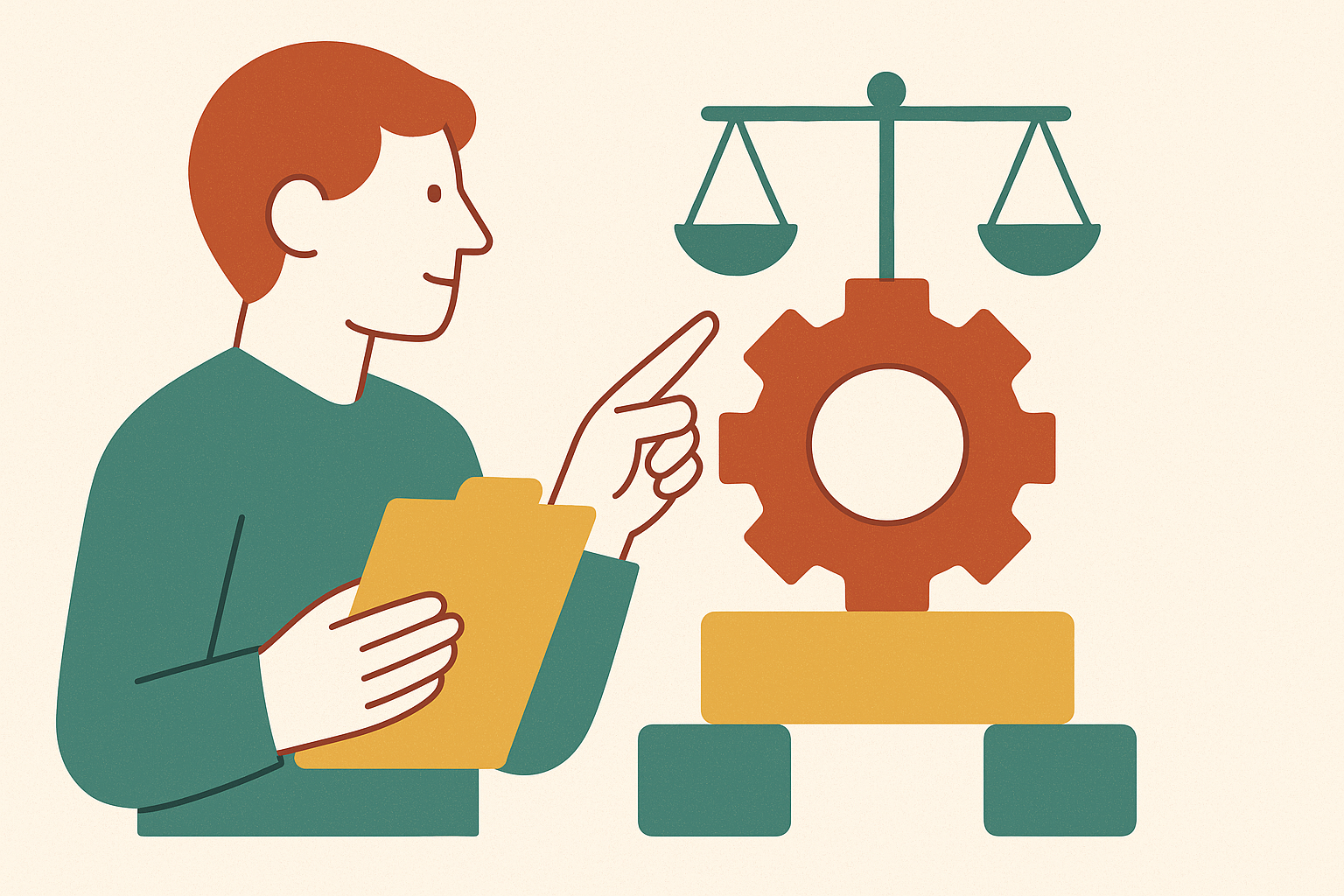
Reliability breaks down at a specific seam: the line between the team that owns what a product does and the team that owns the systems it runs on. Product teams own outcomes such as revenue, roadmap commitments, and adoption, but they do not own the infrastructure that decides whether users actually experience those outcomes as fast, stable, and available. Platform teams own reliability, scalability, and the unit economics of running systems at scale, but they do not control the product decisions that generate the load patterns and failure modes they then have to absorb. Alvarez and Marsal's analysis names the condition directly: "at best, business leaders own outcomes while technology teams own delivery; at worst, ownership is unclear," and in both cases prioritization comes loose from impact, leaving tradeoffs among speed, cost, and quality unresolved. The team that originally builds a system is often disbanded once it goes live, and whoever inherits it has no record of why certain decisions were made, which tradeoffs were accepted on purpose, and which technical debt is structural rather than incidental. None of this stems from a shortage of goodwill between teams. It is a design flaw in the org chart, which assigns ownership to two parties in a way that leaves the boundary between them unowned by anyone, and no amount of mutual respect fixes a gap that the structure itself creates.
What each team optimizes for at the boundary
Platform, SRE, and product teams each optimize for a distinct metric, and those metrics do not combine on their own into one shared reliability outcome. Platform teams measure the time from a developer's first commit to a production deployment that meets organizational standards, which rewards speed and consistency in the delivery path itself. SRE teams measure reliability, latency, and availability once a system is live, which rewards the quality of the running system rather than how fast it got there. Product teams measure feature outcomes, adoption, and total cost of ownership, which rewards the business result regardless of how the underlying system behaves under load. Confusing these three roles is a frequent cause of accountability collapse, because each team, acting rationally within its own metric, deprioritizes reliability work that sits outside what it is measured on. Platform Engineering's 2025 research notes that platform teams stop operating as reactive support only when leadership treats the platform as a product with real users; absent that treatment, the default posture is reactive rather than proactive. Reframing the platform as a product changes what reliability means for the team that runs it: when internal developers are the platform's customers, uptime and reliability become user-experience metrics for the platform team, not background infrastructure concerns. Every team in this picture is doing its assigned job correctly, by the metric it was handed, and the gap between them persists anyway. That is what marks this as a structural problem rather than a matter of effort or personnel.
Why scale makes the gap worse, not better
At small scale, the gap between product and platform ownership is survivable because individuals bridge it informally: a platform engineer who knows the product roadmap by heart, a product manager who understands exactly which infrastructure calls are expensive. That informal bridging is a load-bearing but invisible mechanism, and it breaks the moment an organization grows past the size where a handful of people can hold the whole picture in their heads. Platform Engineering's 2025 research cites Gartner's prediction that 80% of large software engineering organizations will establish platform engineering teams by 2026, which signals that the pressure to formalize these structures is now widespread rather than a niche best practice. As microservices architectures multiply and cloud-native tooling fragments across more vendors and more layers, developers spend a growing share of their time navigating infrastructure complexity instead of shipping features, so the platform team's mandate expands faster than the accountability model built to govern it. Organizations that lack shared platforms respond by duplicating solutions, multiplying vendors, and accumulating technical debt, and every duplication is also a duplication of the ownership gap itself, copied across one more team, one more stack, one more set of informal workarounds. Alvarez and Marsal treats "technology infrastructure is often sub-scale" as its own problem, standing alongside fragmented accountability rather than caused by it, and growth driven by a long tail of brands and use cases exposes the structural issue because informal bridging no longer scales to cover it. Tooling sprawl makes the failure mode concrete: most organizations run separate tools for infrastructure, cloud, and application monitoring, and during an incident engineers have to manually rebuild the connections across data models and alerting systems that those tools never shared in the first place. Every additional context-switch during an outage is time the SLO is burning. Scale does not create the gap. It removes the informal cover that let the gap go unaddressed, and it forces the question of explicit ownership from optional to mandatory.
What explicit ownership contracts look like in practice
Closing the gap requires documented contracts that assign accountability for reliability outcomes between product and platform teams, not informal norms that depend on who happens to be in the room. Alvarez and Marsal states the contract in concrete terms: product owners answer for outcomes, adoption, and total cost of ownership, while platform teams answer for reliability, scalability, security, and unit economics, with platforms governed through clear standards and interfaces and products retaining autonomy to innovate inside those guardrails. The funding model has to match that split, or the contract fails in practice: products get funded against signed-off value cases and get tracked on adoption and outcomes, while platforms get assessed on reliability, consumption, reuse, and unit economics, and a mismatch between how money flows and how accountability is assigned is one of the most common reasons these contracts collapse. Service level objectives are the instrument that makes the contract measurable: platform teams define explicit SLOs for the services they run, and product teams commit to operating within those boundaries, which shifts measurement from reactive numbers like mean time to recovery toward proactive ones like error budgets that can be spent down before anything breaks. Lokalise senior director of engineering Jorge Martins describes a paved-path model, in which platform teams build paths that make the secure, reliable choice the easiest choice for every engineer by default, which shrinks the surface area of the ownership gap by making the correct behavior the path of least resistance rather than a separate discipline engineers have to remember. Alert ownership gives the contract a concrete, everyday test: assigning each alert to the specific engineers responsible for the related code or service keeps alerts from turning into orphaned noise that nobody acts on, because an alert with no assigned owner belongs to no one and gets ignored. Production readiness reviews formalize the moment of handoff itself, checking that dashboards are configured for the key metrics, alert thresholds are set and tested, runbooks are tied to each alert, logging includes correlation IDs, and synthetic monitoring is active, so that before a product team ships, the platform side of the contract has already been verified.
Embedded SRE and the Accountability Dynamic
Embedding SRE capability directly inside product squads, rather than keeping the discipline purely centralized, is the structural mechanism that turns reliability accountability from a stated principle into something teams actually act on. The 2026 evolution of SRE practice describes embedding SREs in product squads for shared outcome ownership, which expands the SRE mandate from raw uptime to service level indicators that map directly onto conversion rates, retention, and legal compliance metrics the product team already cares about. That changes the incentive math: when an SRE's own performance is measured by the same outcome metrics as the product team around them, reliability work competes for space on the same roadmap as new features, instead of getting pushed aside as someone else's job. Research on team ownership in 2026 identifies shared delivery process ownership, the collaborative management of the CI/CD pipeline, monitoring, and incident response together, as the pattern that cuts down operational silos and improves how cleanly teams can roll back a bad change. Embedding SREs this way does not eliminate the central platform team. It produces a two-layer structure instead, where the central platform team keeps ownership of standards, infrastructure, and unit economics, and embedded SREs own the reliability of specific product outcomes within those standards. This model also depends on a cultural shift that has to run alongside the structural one. Derek Ashmore, Agentic AI Enablement Principal at Asperitas, frames reliability as a cross-functional goal rather than something one group owns on behalf of everyone else, and points to blameless retrospectives and shared accountability between developers and platform engineers as the practices that keep embedded ownership working over time rather than collapsing back into finger-pointing. For embedded SREs to spend time on escalations and design rather than on noise management, day-to-day alert triage should be delegated to platform automation. A team small enough to coordinate informally does not need a dedicated embedded SRE role to achieve what that role buys larger organizations, since this two-layer structure assumes a certain organizational scale.
How production verification makes the ownership contract enforceable
An ownership contract only holds if each party gets a clear signal the moment their side of it is being violated, and that signal has to come from production itself, not from a test suite running before code ships. A green CI run is necessary before anything reaches users, but it is not sufficient, because pre-merge tests cannot surface the failures that real traffic and real data expose once a change is live. Shift-right testing, which moves quality verification into the production environment, is what actually puts the ownership contract to the test rather than merely checking a box before merge. Platform Engineering's 2025 research is direct about sequencing here: observability has to precede testing, with logging, distributed tracing, and alerting in place before a single production test runs, not stitched together after something has already broken. Feature flags give teams the operational safety valve that makes this sequencing workable: decoupling deploy from release lets a team ship code dark, then open it to a controlled audience while watching the metrics at each step, so that a regression caught behind a flag is a metric blip switched off in a second rather than an incident that pages anyone. Merging a pull request and verifying that it behaves correctly in production are two separate acts, and most teams only do the first one, which is exactly where the ownership contract fails without anyone noticing. Automated production verification closes that gap by checking every pull request against real telemetry after it deploys, catching regressions before a human has to be paged at all, so the contract gets enforced by the tooling itself rather than by whoever remembers to check. When a regression gets caught automatically and a fix pull request opens on its own without requiring a war-room Slack thread, incident response shifts from reactive firefighting to governed remediation, and the right response to a production problem becomes a reviewed fix PR rather than chaos. This is the category of tooling the ownership contract actually requires: something that sits between a merged change and the live system, watching what real telemetry says rather than trusting what a test suite predicted. OnePatch is one working example of what that layer looks like in practice, verifying every pull request against live production telemetry after it merges and deploys, and opening fix pull requests on its own when something breaks, which is what a production verification layer looks like operating as a first-class safeguard inside the ownership contract rather than as an afterthought bolted onto it.
Ownership Clarity in Agentic AI Development
AI-generated code shipped at agent speed does not shrink the ownership gap between product and platform teams. It widens it, because the blast radius of an unverified deploy now grows faster than any human on-call rotation can absorb. Unlike a passive AI assistant that offers suggestions for a person to accept or reject, agentic AI systems perceive their environment, reason about it, plan multi-step actions, and execute those steps independently, which moves the human role from in-the-loop analysis of every step to on-the-loop supervision of an agent that has effectively become the first responder. Augment Code's 2026 guide for AI platform engineering leaders describes the resulting mandate: a platform engineering leader now has to architect an orchestration layer where routing, retries, circuit breakers, payload validation, and sequencing are managed by the framework itself rather than left to the agent's own judgment, and has to build rollback and incident response mechanisms designed specifically for changes an agent generated. Speeding up how fast code gets written, without also standardizing testing, policy, release controls, and observability to match, does not produce faster delivery. It produces a wider blast radius when something goes wrong. Observability for AI agents carries its own open problem: organizations need a clear record of which model version was running at a given moment, so that when an incident happens, someone can trace the behavior to the model or to a system change elsewhere, and OpenTelemetry's conventions for GenAI agents and frameworks remain in Development status, with only the core client spans stabilized, so the telemetry standards this kind of record-keeping depends on are still unsettled. The sharpest risk agentic systems introduce is confident wrongness: some teams have already reported disabling AI runbook assistants after the assistant confidently issued the wrong command during a live P1, which illustrates that a plausible but incorrect suggestion delivered under pressure costs an organization more than getting no suggestion at all. When an AI agent ships a change that causes a regression, the contract governing that system has to specify in advance which team is accountable for catching it, reverting it, and learning from it, because that kind of decision cannot be improvised for the first time in the middle of an active incident.
A working reliability accountability model end to end
A working model for reliability accountability is a stack of explicit contracts, organizational structures, and technical mechanisms that together make sure production health has a named owner at every layer, from the org chart down to the pull request. At the organizational layer, platform teams own reliability, scalability, security, and unit economics, while product teams own outcomes, adoption, and total cost of ownership, with funding and governance models built to match that split rather than working against it. At the team layer, embedded SREs give that contract a daily pulse inside product squads, sharing outcome metrics with the product team while central platform teams continue to hold the line on standards and infrastructure. At the technical layer, SLOs, alert ownership, and production readiness reviews turn the contract into something measurable before a change ships, and automated production verification turns it into something enforced after that change is live, catching what pre-merge testing structurally cannot see. Agentic AI does not replace any layer of this stack. It raises the cost of leaving any layer undefined, because a system capable of shipping changes on its own needs a contract that was settled before the first incident, not one negotiated during it. Reliability accountability holds up only where the contract between product and platform is written down, funded, measured, and verified in production, rather than assumed.
Sources
- Hiring an AI Platform Engineering Leader: A 2026 Job Spec
- Product and Platform Models: The Operating Model Enterprises Need to Scale Technology and Generate Recurring Business Value
- From Firefighting to Resilience: Building Reliability into the Platform Itself - Platform Engineering
- The Evolution of Site Reliability in 2026: SRE Beyond Uptime
- How Team Ownership Boosts Engineering Performance in 2026